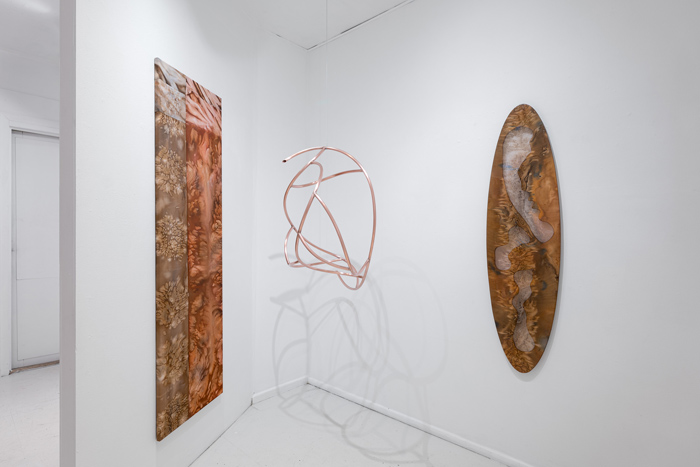
View from left Element #7 2025 170x50 cm. syntetic chiffon and woodframe
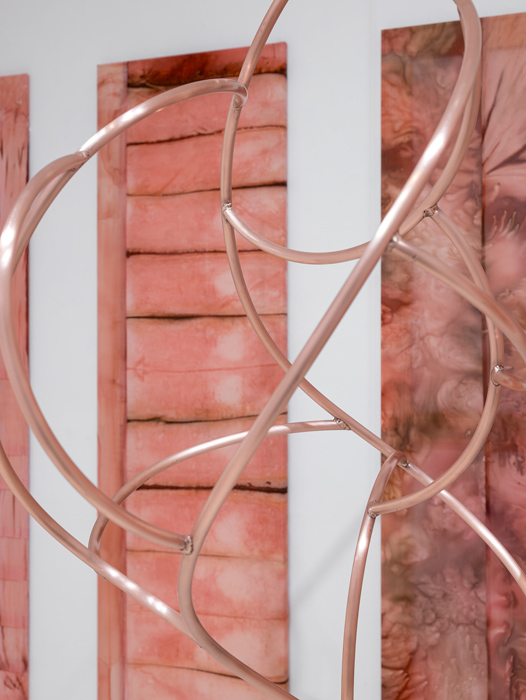
Capillary Infrastructure 2026 90x64x43 cm. copper. Filtering 2025 133x34x4 cm.
Silk, silicone and birch veener.
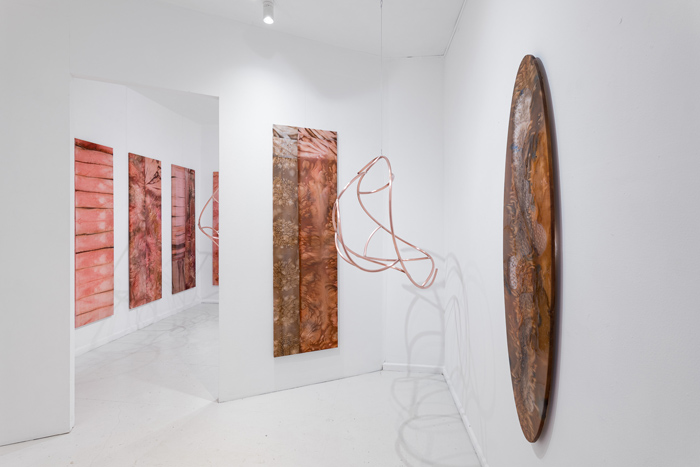
View
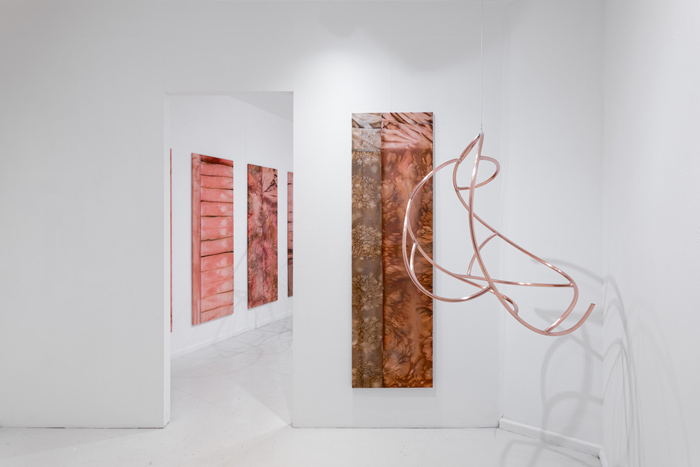
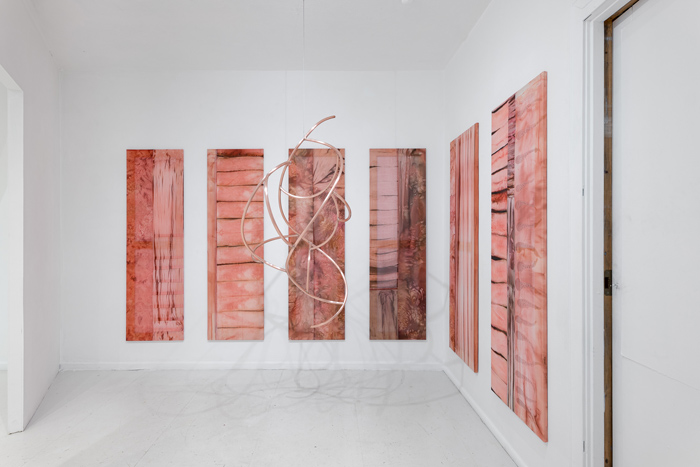
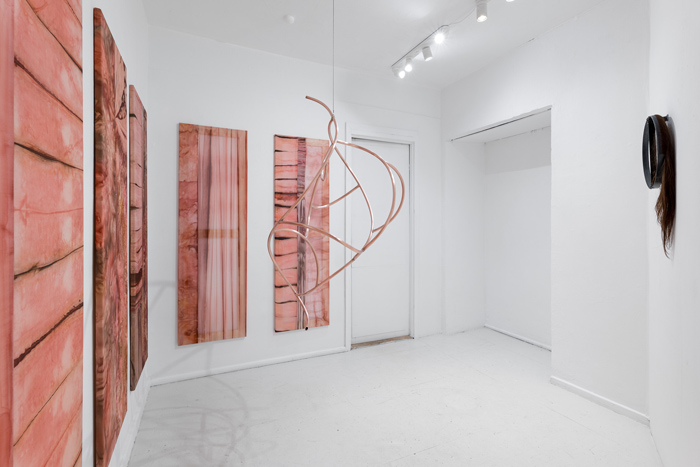
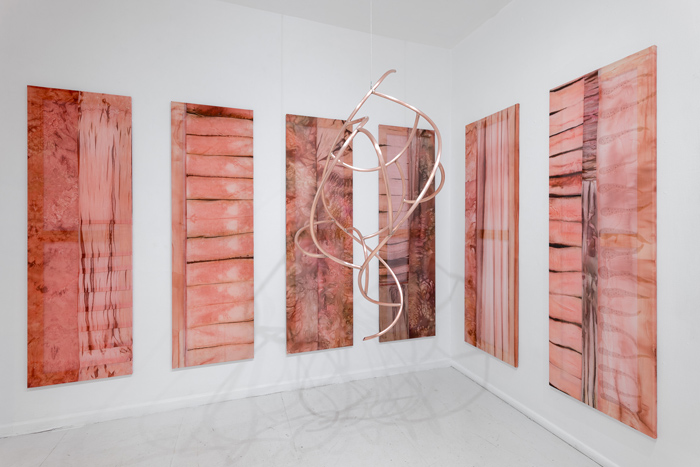
View Elements #1-#6 2025/26 170x50 cm. each. silk, syntetic chiffon, acetat and woodframes.
Capillary Infrastructure 2026 134x65x52 cm. copper.
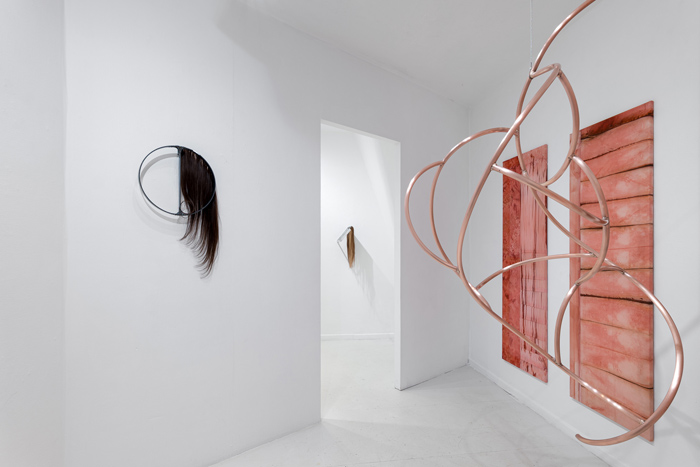
View from left Cognitive 2026 65x38x6 cm. iron and real hair. Capillary Infrastructere 2026
134x65x52 cm. copper.
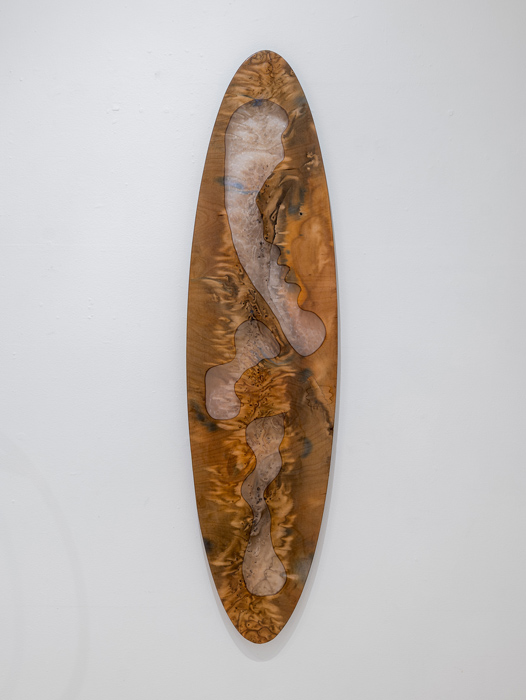
Filtering 2025 133x34x4 cm. silk, silicone and birch veener.
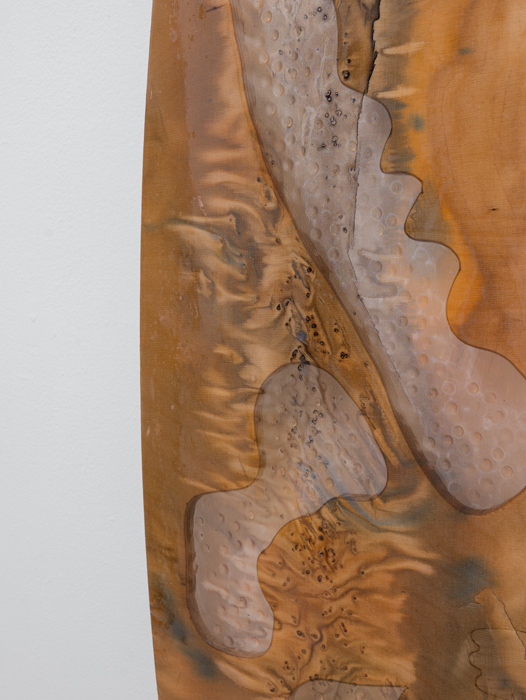
Filtering close up
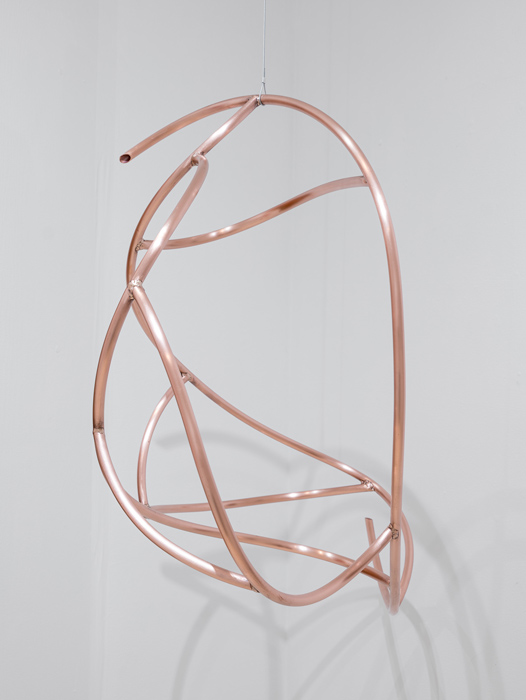
Capillary Infrastructure 2026 90x64x43 cm. copper
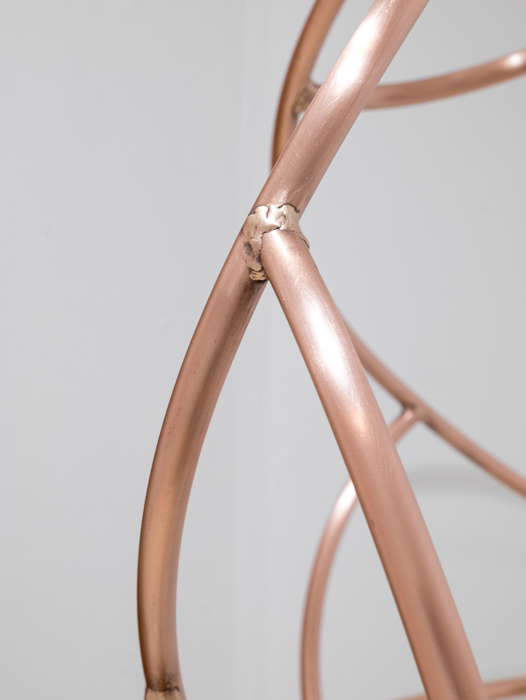
Capillary Infrastructure close up
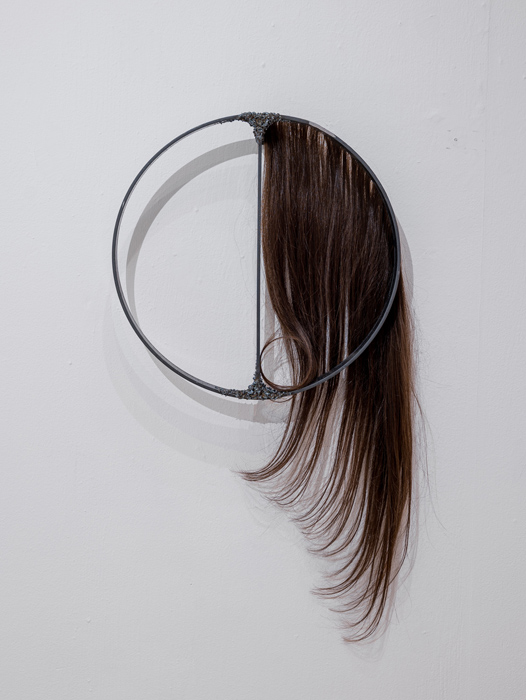
Cognitive 2026 65x38x6 cm. iron and real hair.
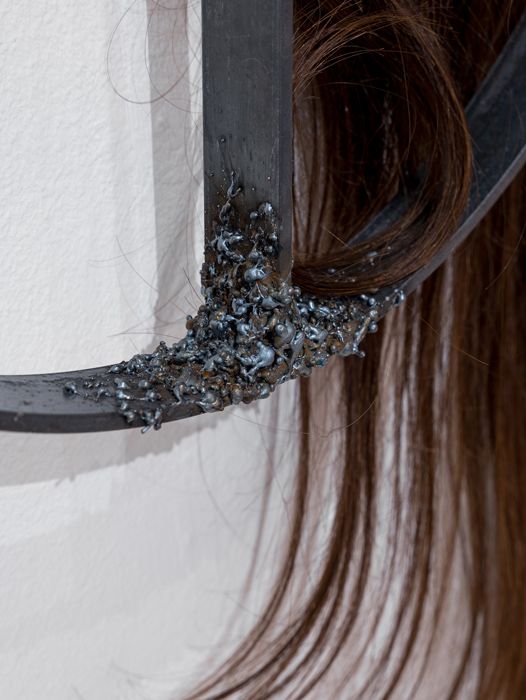
Cognitive close up
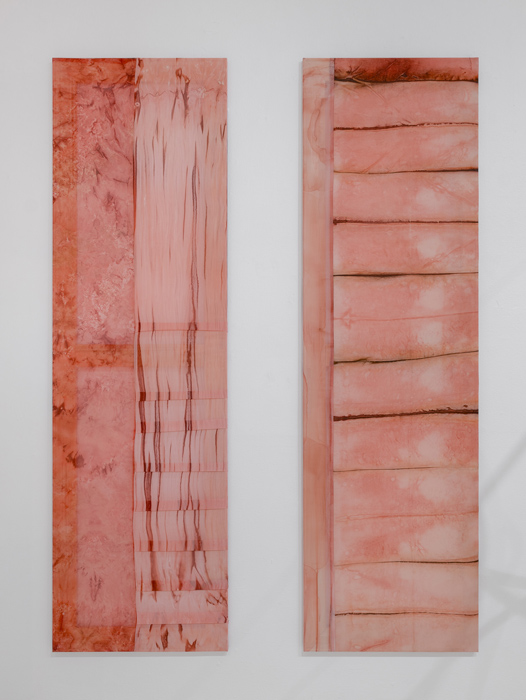
Elements #1 & #2 2025 170x50 cm. silk, syntetic chiffon, acetat and
woodframe
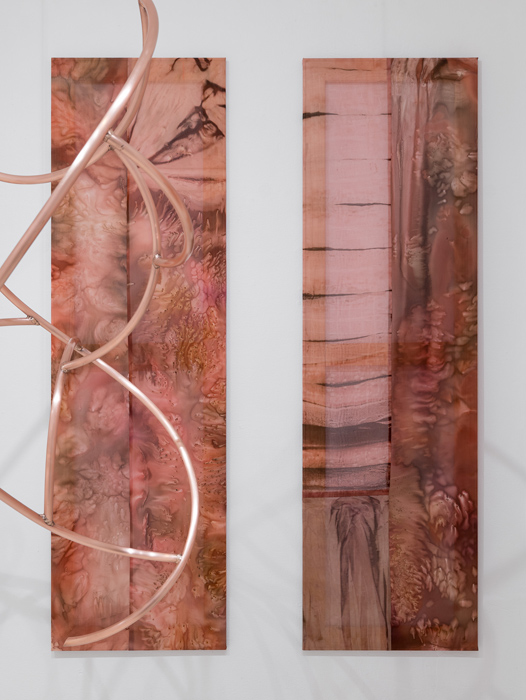
Elements #5 & #6 2025/26 silk, syntetic chiffon, silicone and wood frame
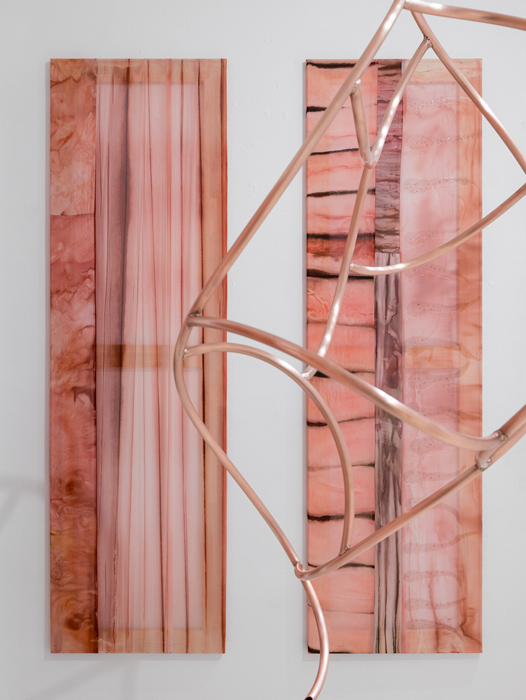
Elements #3 & #4 2025 170x50 cm. syntetic chiffon, silk, acetat and
wood frames
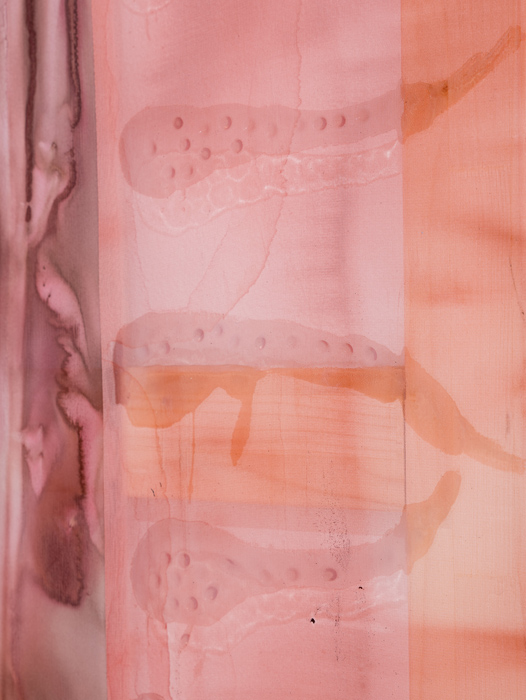
Elements #5 close up silk and syntetic chiffon
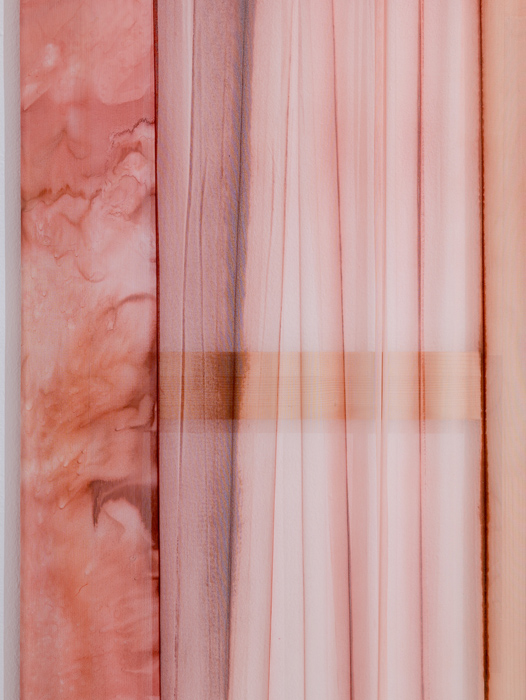
Element #6 2026 syntetic chiffon, silk, silicone
Condition
The body is a powerful yet porous system that is constantly exchanging matter with its surroundings
through what it inhales, touches, and consumes. In the exhibition Condition, Louise Sparre (b.
1977) investigates how the body carries traces of this exchange—both physically and through the
metaphysical influences we experience, as we are constantly exposed to an overload of impressions.
Sparre draws on a scientific understanding of the body as a biological system composed of cells,
fibres, and circulatory networks through which material is absorbed, transported, and stored. At the
same time, the body is our sensory apparatus through which the world is also experienced
emotionally.
The duality of the body is central to Sparre’s practice. It is a physical, biological system consisting
of trillions of cells, yet simultaneously a sensing human being shaped by its surroundings and
experiencing the world around it. We are, and are made up of, small parts within a greater whole.
Human beings are not separate from the surrounding universe but are engaged in continuous
exchanges with the natural and technological world, as well as with the intensity of contemporary
life: information exchange, resource consumption, and accelerating social change.
Through her textile works, Louise Sparre explores the body as a connective link. The textile pieces
appear as membrane-like surfaces in which fibres gather into networks that both protect and absorb.
Materials that are normally worn close to the body evoke connective tissue, which holds the body
together and enables movement. The body and everything around it participate in the same vast
cosmic network, formed by the atoms of the entire universe—a network that often makes it difficult
to determine where we end and our technology begins.
The exhibition Condition explores the tension between the microscopic and the cosmic. The
structures found within the body also exist outside it. The body’s cells, fibres, and circulatory
systems are mirrored in the internet, plant root systems, and planetary orbits. Elements such as iron
and copper, formed in a cosmic moment at the beginning of the universe, are part both of the body’s
chemistry and of the technology that surrounds us. We are made of the same material as the digital
devices in our hands.
Human hair appears both familiar and estranged. In Condition, hair is used as an abject element that
both belongs to the body and is detached from it, while simultaneously forming part of two of the
works.
Condition presents a series of intermedial works: wall-mounted textile installations in life-size scale
and sculptural objects made from hair, aluminium, iron and copper. The textile works appear as
bodily reflections and states—tense, porous, and sensuous—where influences seem to accumulate
and circulate. Objects made of human hair revolve around digital reality in relation to cognition,
while the tension between the organic and industrial qualities of the materials points to a body
entangled with its surroundings.
Condition centres on how the body is shaped by what it absorbs and how the influences of
contemporary life leave traces in lived and sensory experience.
Text by Louise Wohlert Kjær
The exhibition is kindly supported by The Danish Art Foundation and The Cultural Development Fundation Aarhus.
supported by
